If you're wondering is Genshin Impact a gacha game, the honest answer is yes — but that only tells part of the story. HoYoverse’s flagship title mixes a full open-world action RPG with a banner-based summoning system, and by 2026 that formula has helped it pass $5 billion in lifetime revenue while still remaining one of the easier live-service games to play for free. New banners roll in on a steady six-week patch cycle, fresh characters arrive with story quests and full voice acting, and Teyvat keeps getting bigger. All of that is tied, one way or another, to the gacha system at the center of its monetization. If you want to know how the banners work, what pity actually means, and whether spending is necessary, this guide breaks it all down.
Is Genshin Impact a Gacha Game?
Yes, Genshin Impact is absolutely a gacha game — more specifically, it’s a hybrid open-world RPG built around a gacha summoning layer. The word “gacha” comes from Japanese capsule toy machines, where you put in money and get a random prize. In Genshin, that idea shows up through the Wish system, where you spend Intertwined Fates or Acquaint Fates to pull characters and weapons from a rarity-based pool.
What makes Genshin feel different from a more traditional gacha title is everything happening outside the banners. By 2026, the game includes eight explorable nations, a real-time elemental combat system based on reactions, a main story that can easily last dozens of hours, and long-term progression through artifacts, talents, and character ascension. None of that is locked behind a paywall. So when players ask is Genshin Impact a gacha game, the reason is pretty understandable: yes, the characters are tied to randomized pulls, but the actual day-to-day experience — exploring, questing, fighting bosses, clearing story content — can exist almost entirely separate from spending.
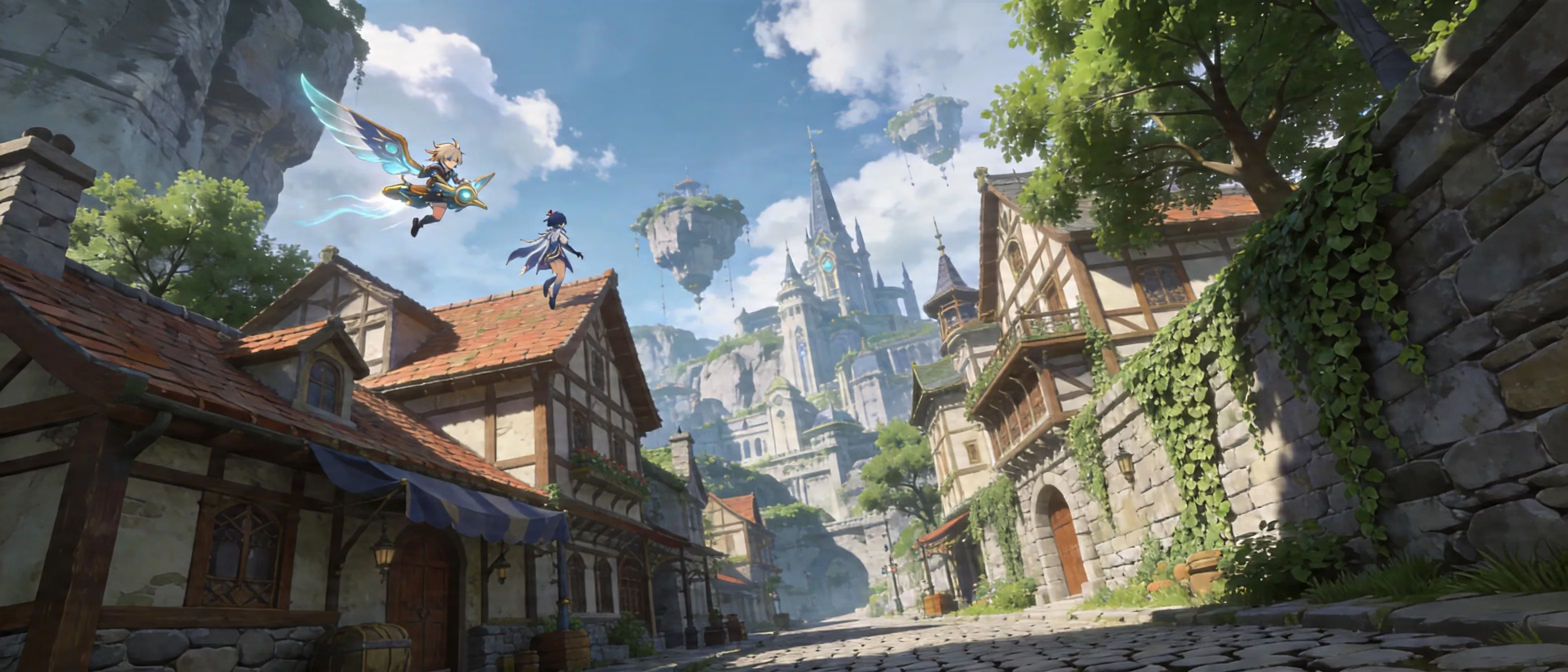
A lot of the confusion comes from how the game presents itself. Genshin’s trailers usually focus on the world, the music, and flashy combat rather than banner timers and pity counters. So for new players, opening the Wish screen for the first time can feel like a surprise reveal instead of the monetization backbone it really is. At the end of the day, both sides are true, and you really need to understand both before putting serious time or money into the game.
Genshin Impact Gacha System Explained
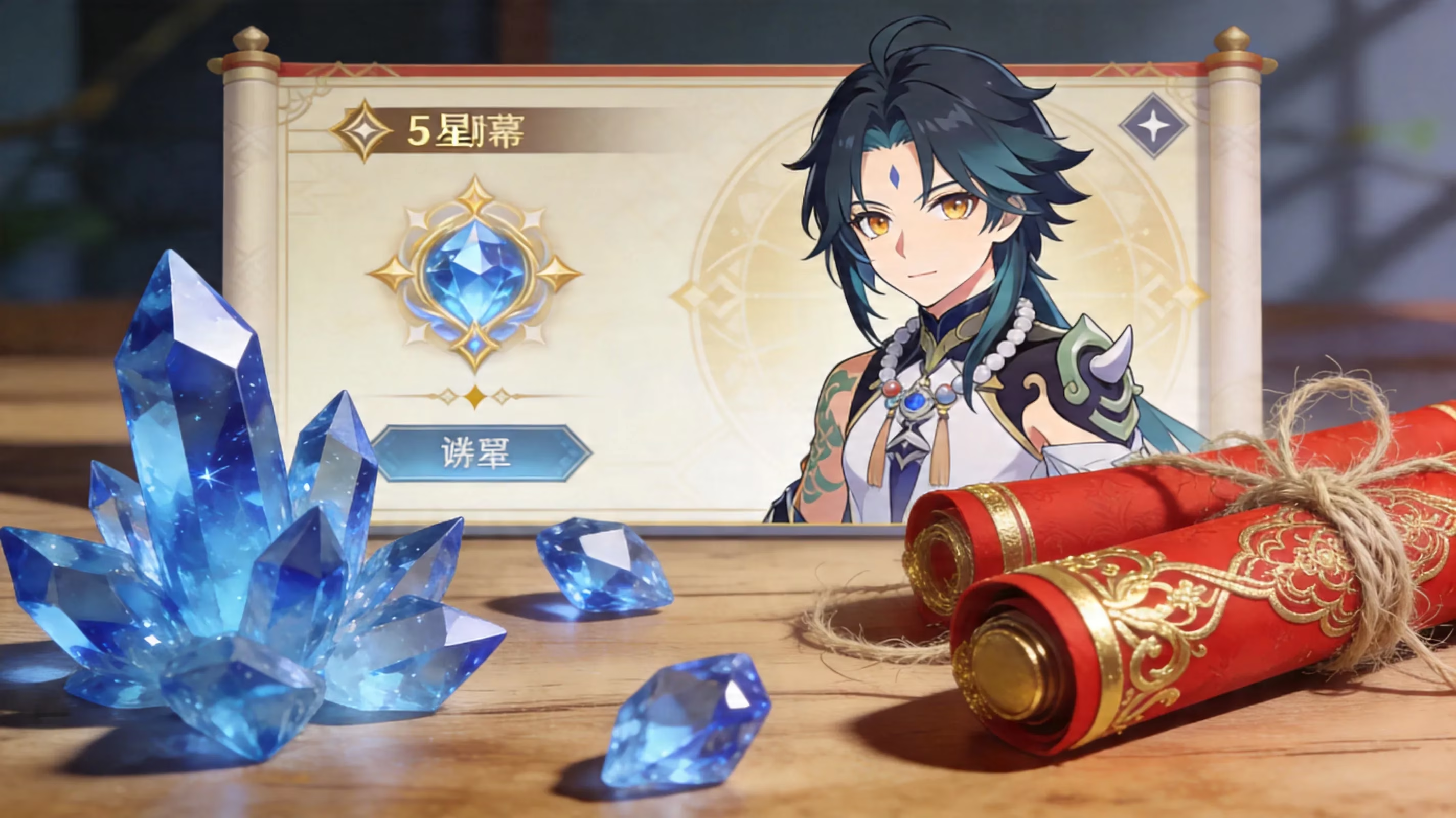
Genshin Impact’s pull economy revolves around three main currencies. Primogems are the core premium currency, and you can earn them through quests, events, exploration, commissions, and other gameplay sources, or buy them directly. Every 160 Primogems converts into one Intertwined Fate or Acquaint Fate. Genesis Crystals are the paid-only currency, purchased with real money and then converted 1:1 into Primogems. That extra conversion step — money to Genesis Crystals, then to Primogems, then to Fates — creates a bit of distance between spending and pulling, which is something mobile monetization research has pointed out for years.
At any given time, Genshin runs three core banner types:
-
Character Event Wish: The limited banner, usually featuring one or two rate-up 5-star characters during a three-week phase.
-
Standard Wish: The permanent banner with a fixed pool of 5-star characters and weapons, no rate-up, and no rotation timer.
-
Weapon Event Wish: The weapon banner, which features two rate-up 5-star weapons and uses the Epitomized Path system.
The base 5-star rate is 0.6% per pull across banners. On paper, that looks rough. In practice, pity changes the picture a lot. The 4-star base rate is 5.1%, and the game guarantees at least one 4-star item every 10 pulls on average. Limited character banners also use the familiar 50/50 rule: when you hit a 5-star, there’s a 50% chance it’s the featured unit and a 50% chance it’s one of the standard 5-stars. If you lose that 50/50, your next 5-star on a limited character banner is guaranteed to be the featured one.
Pity also carries over, but only within the same banner type. Character Event Wish pity moves from one limited character banner phase to the next. Weapon pity carries between weapon banners. Standard pity stays on standard. What does not happen is crossover between those categories, so character pity won’t help you on the weapon banner, and weapon pity won’t help you on standard. Keeping track of which pity count belongs where is a huge part of smart pull planning.
Character Event Wish
On the Character Event Wish, soft pity starts around pull 74. That’s the point where the 5-star rate begins climbing sharply with each additional pull. Community tracking from sites like Paimon.moe, which has logged tens of millions of pulls, shows the odds jumping from around 6% at pull 74 and ramping up fast through the 80s. In real terms, most players who don’t get an early 5-star will usually see one somewhere between pulls 75 and 85.
Hard pity is at pull 90, which means the game will force a 5-star by then with no exceptions. Once you combine that with the 50/50 system, the absolute worst-case scenario for getting a specific limited 5-star is 180 pulls: you lose the first 50/50 at hard pity, then go all the way to hard pity again on the guaranteed cycle. That’s the ceiling. In actual play, soft pity and lucky 50/50 wins bring the average down a lot, with most featured 5-stars landing somewhere around 62 to 105 pulls depending on where you start.
For F2P players especially, the 50/50 status matters more than almost anything else. If you’re entering a banner with a guarantee already banked from a previous loss, your odds and your resource planning look way better. A lot of veteran players track that guarantee status for months and only commit when the timing lines up with a high-priority banner.
Weapon Banner
The Weapon Event Wish, also called Epitome Invocation, uses a shorter pity cycle. Soft pity usually starts in the low 60s — roughly around pulls 63 to 65 based on community data — and hard pity kicks in at pull 80 instead of 90. The catch is that the banner uses a 75/25 split rather than a straight 50/50. That means 75% of your 5-star pulls will be one of the two featured weapons, while the remaining 25% can be a standard 5-star weapon that does nothing for your Epitomized Path progress.
Epitomized Path is the targeting system for the weapon banner. Before pulling, you choose one of the two featured 5-star weapons. If you get the other featured weapon instead, you gain one Fate Point. Since Version 5.0, just one Fate Point is enough to guarantee your selected weapon on the next 5-star, which lowers the worst-case cost to 160 pulls across two hard pity cycles. Before Version 5.0, you needed two Fate Points, and the worst case was 240 pulls, so this was a pretty meaningful improvement.
There’s one big limitation, though: Fate Points disappear when the banner ends. They do not carry over to the next weapon banner, even if the same weapon comes back later. Pull pity does carry over between weapon banner rotations, but Fate Points do not. That’s exactly why the weapon banner is still considered risky, especially for newer or low-spending accounts.
How Gacha Genshin Impact Really Feels
In actual day-to-day play, Genshin’s gacha in 2026 feels more forgiving than it did in the early years, but it still depends heavily on the patch. A fully active F2P account can usually earn around 5,500 to 8,000 Primogems per month through daily commissions, Spiral Abyss, events, quests, and exploration. Daily commissions alone give 60 Primogems per day, which adds up to 1,800 a month. If you also full-clear Spiral Abyss every cycle, that’s up to another 1,200 monthly. Events and map content fill in the rest. Across a normal six-week patch, that usually works out to about 50 to 75 pulls for a committed free player. That’s enough to participate, but not enough to guarantee every character you want unless you save carefully.
The difference between a “map patch” and a “dry patch” is very real. Version 6.5 in April 2026, which added the Dornman Port expansion, gave F2P players roughly 74 pulls across the patch, with exploration alone contributing more than 2,500 Primogems. By comparison, leaked estimates for Version 6.6 and its Luna VII update pointed to around 60 F2P pulls in a patch without a major map expansion. That’s a pretty noticeable drop, and it means a guaranteed 5-star often depends on savings from earlier versions.
For light spenders, Blessing of the Welkin Moon is easily the best-value option. At about $5 USD per month, it gives 90 Primogems per day for 30 days plus 300 Genesis Crystals upfront, for roughly 3,000 Primogems total. In terms of efficiency, it beats every normal top-up pack outside of first-time purchase bonuses. In practical terms, Welkin adds about 23 pulls per month, which can push a player’s total patch income into the 90 to 100 pull range. That’s a massive difference if you’re trying to secure one limited character without hoarding forever.
The paid Battle Pass adds even more, though not nearly as much as Welkin. Its premium tier costs around $10 USD and gives 680 Primogems plus four Intertwined Fates per patch. Put Welkin and Battle Pass together, and a player can reach roughly 92 pulls even in a dry patch. That’s not a guaranteed featured 5-star from zero in the worst case, but it is enough to hit soft pity comfortably and makes banner planning way less stressful.
Is Genshin Impact Pay to Win or F2P Friendly?
Whether Genshin is pay to win really depends on what you mean by “win.” If we’re talking about the main story, world exploration, side quests, and most event content, then no — paying doesn’t unlock some exclusive path that free players can’t reach. You can clear story arcs, explore every region, and progress through the game without spending anything at all.
The more demanding endgame modes tell a slightly different story. Spiral Abyss floors 11 and 12, Imaginarium Theater, and Stygian Onslaught can absolutely reward stronger rosters and better gear. Even so, consistent 36-star Abyss clears are still possible with properly built 4-star units. The community has proven that over and over with characters like Bennett, Fischl, Xingqiu, and Xiangling, all of whom remain way stronger than their rarity might suggest. That said, newer Abyss cycles have gradually become more demanding, and certain enemy lineups or elemental checks do favor accounts with broader rosters — something whales build faster than everyone else.
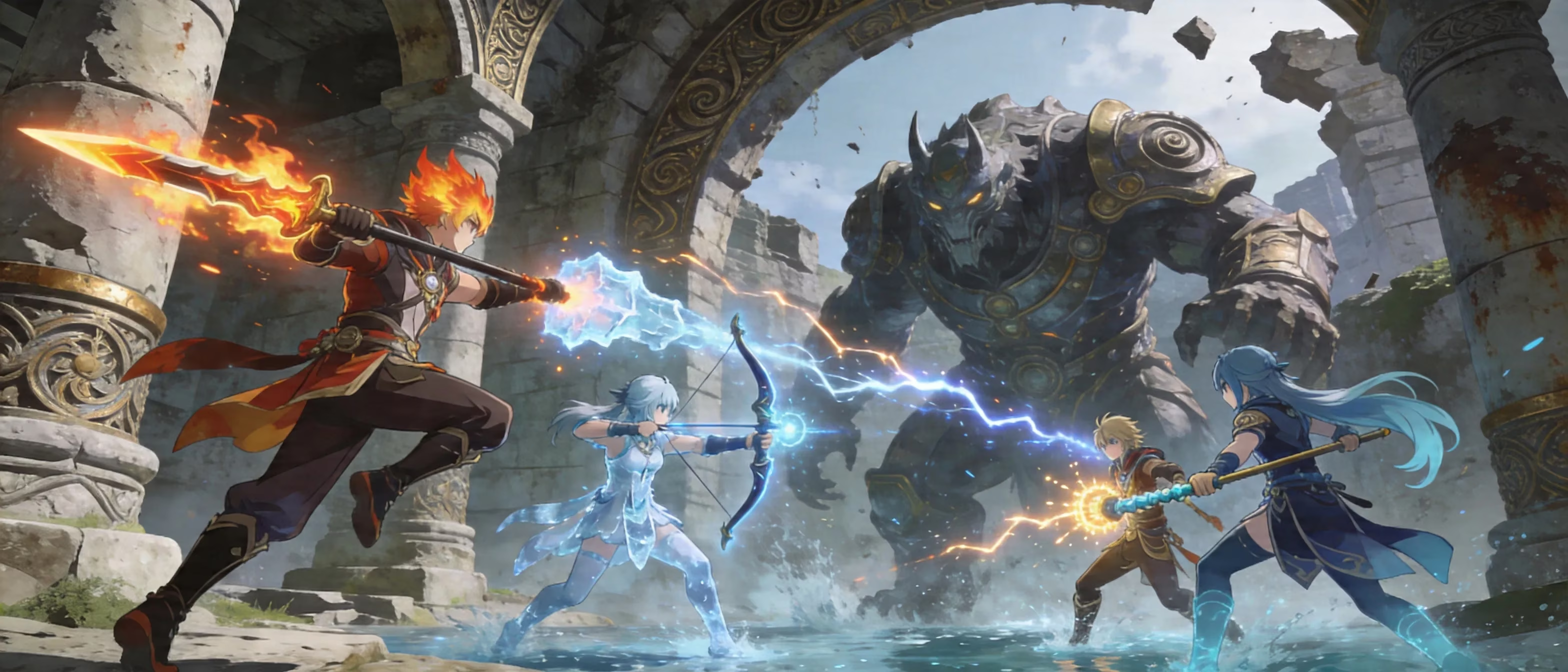
Still, whale advantage in Genshin is real, but it has limits. Constellations can push a character to a much higher ceiling, and some C6 units barely resemble their C0 versions in terms of output or flexibility. Signature 5-star weapons also matter, often giving around a 25% to 40% damage increase over strong 4-star alternatives. But the key point is that limited characters are generally designed to function well at C0, and competitive 4-star weapons remain usable. If you understand team-building, prioritize strong reaction-based comps, and invest in proven 4-star staples, the game stays very F2P friendly by gacha standards.
Should You Play Genshin If You Hate Gacha?
Honestly, maybe — because Genshin has enough non-gacha content to carry the experience for a long time. Players who dislike randomized summoning have still spent hundreds of hours in Teyvat just exploring, solving puzzles, doing world quests, and following the Archon story. The world design across all eight nations is packed with hidden rewards, environmental storytelling, and side content that doesn’t care what your roster looks like. The main narrative is also much bigger than people expect, with political conflict, mythology, and long-running character arcs that feel closer to a single-player RPG than a typical mobile-style gacha.
If you hate gacha but still want to try Genshin, the best move is to build pull discipline early and stick to a skip strategy. Pick one or two characters you genuinely like, save only for them, and ignore the rest. That approach works. The 50/50 system means every banner carries risk unless you’re entering with a guarantee already secured, so waiting until your account is in a favorable position can save you a lot of frustration.
That said, some players should probably stay away. If you’re especially vulnerable to sunk-cost thinking, Genshin’s pity system can be rough psychologically — seeing 60 or 70 pulls already invested makes it very tempting to keep going just to “finish” the cycle. The same goes for players who struggle with FOMO. New limited characters show up every three weeks, and many of them are genuinely appealing, both in gameplay and presentation. The healthiest way to play is to treat characters as long-term goals, not instant purchases, and to remember that missing a debut banner usually doesn’t mean missing that character forever. Reruns happen.
Genshin Impact Gacha FAQ
| Question | Answer |
|---|---|
| Is Genshin Impact a gacha game? | Yes. Characters and weapons come from a randomized Wish system that uses Primogems. At the same time, the game is also a full open-world RPG that you can play without spending. |
| Can you enjoy Genshin for free? | Yes, very easily. Story content, exploration, and most events are fully accessible for free. With disciplined saving, F2P players can still pull effectively for 1–2 characters per patch cycle. |
| How much does a guaranteed character cost? | In the absolute worst case, 180 pulls at 160 Primogems each equals 28,800 Primogems. At standard pricing without first-time top-up bonuses, that comes out to roughly $300–$370 USD. With soft pity and a favorable 50/50, the average is usually much lower, often around $110–$200. |
| What is the best banner for beginners? | The Character Event Wish is usually the best banner for new players because it helps build a functional roster quickly. Beginners also get access to the discounted Beginner’s Wish and can secure Noelle, a 4-star Geo character, early on. Weapon banners are generally a bad idea for new or F2P accounts because Epitomized Path is more complicated and Fate Points reset when the banner ends. |
| Does pity carry over between banners? | Character Event Wish pity carries between limited character banner phases, but not to weapon or standard banners. Weapon pity carries between weapon banner rotations. Fate Points do not carry over. |
Conclusion
So yes, is Genshin Impact a gacha game? Definitely. The Wish system is a core part of the game, and HoYoverse doesn’t really hide that once you’re in. But Genshin is also a lot more than its banners. Hard pity, the 50/50 guarantee, and the Version 5.0 Epitomized Path update give the system clear boundaries, while the rest of the game offers a huge amount of value outside the summoning loop — from exploration and elemental combat to serious theory-crafting and a story that has only gotten bigger over six years of updates.
If you’re starting in 2026, the best approach is pretty simple: decide which one or two characters matter most to you, collect every free Primogem source you can, and never pull blindly without checking your pity and 50/50 status first. The gacha side of Genshin is real, and its design is absolutely intentional. Still, if you go in with patience and a bit of discipline, Teyvat gives you a lot back. Good luck, Traveler.